Credit-based plans: how usage credits bought in advance run down
Credit-based plans let you buy usage in advance and spend it as you go. They are flexible, but expiry dates, refill prices and unclear conversion rates can make them hard to compare. Here is how to read them.
ReloadableVCC Team 3 min read
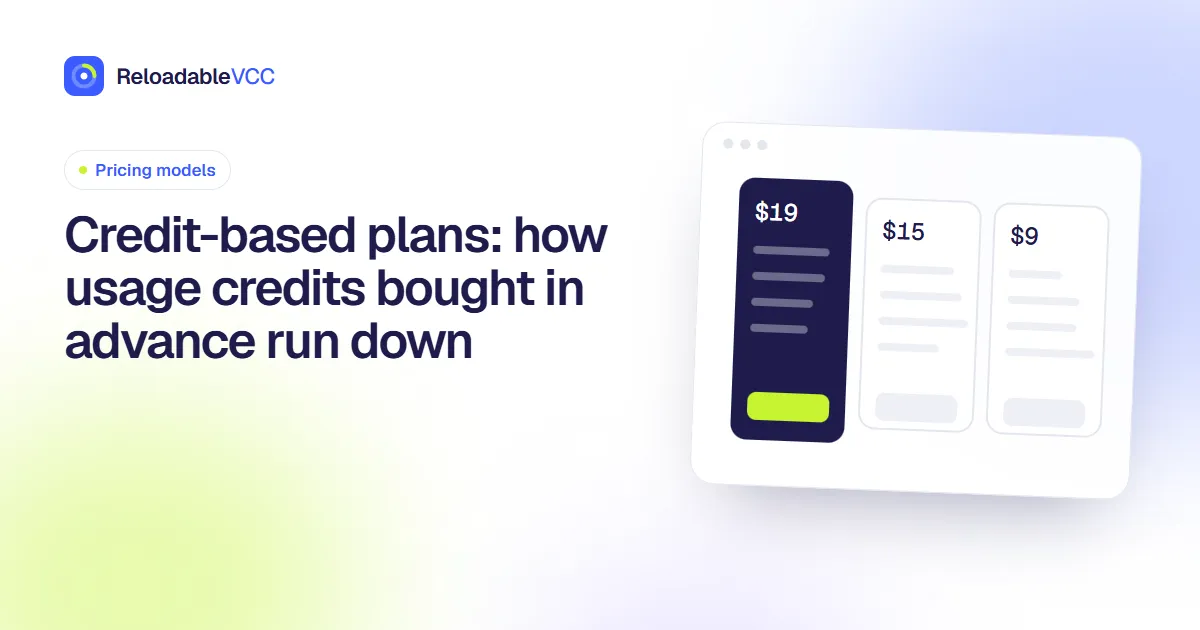
Instead of a flat monthly fee, some services sell credits. You buy a bundle in advance, and each action uses some of them: generating an image, sending a message, running a report, minutes of processing. When the credits run out, you buy more or wait for the next monthly allowance.
Credits can be a fair way to pay for uneven usage. They can also make the real price hard to see.
How credits are usually sold
- Monthly allowance. A subscription includes a number of credits each month. Unused credits may or may not roll over.
- One-off packs. You buy a pack when you need it. Larger packs usually cost less per credit.
- Automatic refills. When your balance drops below a threshold, a new pack is bought automatically.
Many services combine all three.
Work out the price per action
A credit is only meaningful once you know how many each action costs. Find the service's pricing page or help article that lists credit costs, then calculate:
price per action = (pack price ÷ credits in pack) × credits per action
Do this for the actions you use most. Two services selling "1,000 credits for $10" can have very different real prices if one charges 2 credits per action and the other charges 10.
Watch the expiry rules
Credits often expire:
- monthly allowances may reset at each renewal;
- purchased packs may expire after a few months or a year;
- credits may be lost if you downgrade or cancel.
Expiring credits mean that buying the biggest pack to get the best price per credit only saves money if you will actually use them in time.
Be careful with automatic refills
Automatic refilling is convenient but removes the natural pause where you notice how much you are spending. If you turn it on:
- set the threshold and pack size deliberately;
- look for a monthly spending cap and set one;
- check the receipts each month for how many refills happened.
Paying from a card that holds a planned amount also acts as a cap: refills stop when the balance does. Make sure that is what you want before relying on it.
Estimating how many credits you need
- Look at your past month's usage, if the service shows it.
- Multiply your typical actions by the credits each one uses.
- Add a margin of around a fifth for busier weeks.
- Compare the result with the plan's monthly allowance and the price of packs.
If your usage is uneven, a smaller allowance plus occasional packs may beat a large plan you rarely use up.
Comparing credit plans with flat plans
A flat plan is easier to budget for. A credit plan is cheaper if your usage is low or irregular. For a fair comparison, convert both into a price per month at your realistic usage level, as in our guide to comparing two tools on total cost.
Frequently asked questions
Do unused credits carry over?
Monthly allowances often reset; purchased packs often last longer but still expire. Read the rule for each type separately.
Are credits refundable?
Rarely. Treat credits as spent once bought, and buy packs sized to what you will use before they expire.
Summary
Convert credits into a price per action, read the expiry rules before buying large packs, use automatic refills only with a cap, and estimate your needs from real usage plus a margin. Then compare the monthly total with any flat alternative.
- #credits
- #usage pricing
- #refills